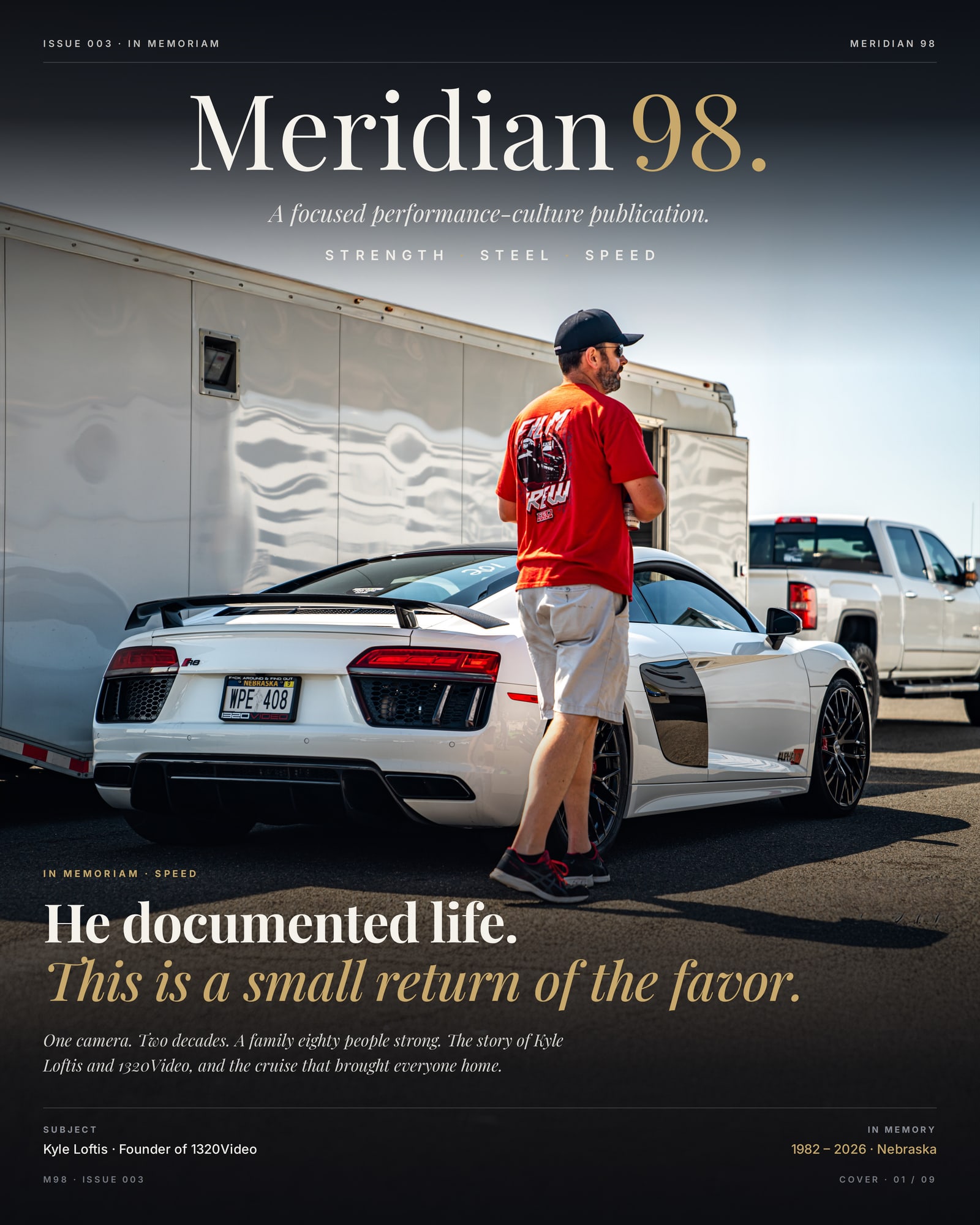
PREFACE · A CAMERA, A QUARTER MILE, AND EVERYONE IN BETWEEN
Most people don’t know where the number comes from.
Thirteen hundred and twenty feet, the length of a quarter mile. Kyle Loftis didn’t know that either, the day a friend suggested the name. He spent the rest of his life making it mean something to the whole world.
Some people build a business. A rare few build a place: somewhere a whole community can gather, find each other, and feel like they belong. Kyle Loftis built the second kind, and he did it with a camera in his hands and a grin on his face.
This is the story of how a teenager with a point-and-shoot camera and a 1995 Neon became the person who, in the words of one of his closest friends, covered a generation’s twenties and thirties “like a freaking Bible.” It is told, wherever possible, in his own words, from the first episode of 1320 Stories, the series he launched to tell the stories behind the racers and the people he met along the way, beginning, fittingly, with his own.
It is not, in the end, a story about quarter miles. It is a story about the people in the cars, the friends in the parking lot, and a man who never stopped pointing the camera at the thing that mattered: the experience, and everyone he got to share it with.
He documented life. This is a small return of the favor.
One camera. Two decades. A family eighty people strong.
CHAPTER I · THE CAMERA
A point-and-shoot, a 1995 Neon.
Before there was a company, there was a teenager in Nebraska who liked to take pictures, and who happened to be standing where something extraordinary was about to begin.
It started, of all places, with car stereos. In the late 1990s, Loftis got into car-stereo competitions in high school, traveling to events in a 1995 Neon he bought from his father. He took photos along the way. It was a habit he traced back to a grandfather who had worked as a town photographer. There was nowhere to post any of it; social media did not exist yet. So he burned the pictures and clips to CDs and sold them at the next event to cover the gas to get there. The whole model of his life was already there, in miniature: make something, share it with the people who were there, let it carry you to the next place.
The shift from stereos to engines was, in his telling, almost expected. A coworker took him to his first street race around 2001, a parking-lot gathering of well over a hundred cars that scattered when a police helicopter and a line of cruisers arrived all at once. Nothing came of the night. But something stuck. He began shooting the races and posting them to local message boards, then to niche car forums anywhere they would land. Friends ran a car wash to help him buy a real video camera. For the first several years, 1320Video recorded to MiniDV tapes, and he kept hundreds of them, a quiet archive of a world almost no one else was bothering to save.
He started taking photos along the way, a habit traced to a grandfather who worked as a town photographer.
FROM 1320 STORIES, EP. 1
CHAPTER II · THE NAME
It was only 1320 anything back then.
The brand that became internationally recognized was nearly called something else entirely.
For a while, Loftis ran his footage as “Heidi Ho Productions,” a joke from his nickname at the stereo shop, with a logo he cheerfully admitted “wasn’t gonna fly.” In early 2003 he posted on the Nebraska Street Scene message board and simply asked what to call the operation. A friend named Parker suggested 1320Video. Loftis didn’t get the reference, and asked where the number came from.
“He said it’s the amount of feet in a quarter mile. I didn’t know that. Most people don’t know that, but when you go time slip, it has it on there.”
KYLE LOFTIS, 1320 STORIES EP. 1
The name stuck. It was, as he put it, “only 1320 anything back then,” a small, exact number that almost nobody recognized, attached to a thing almost nobody was filming. Both of those would change. The number would end up on merch trailers, on hats worn on two continents, and, years later, on the shirts a grieving community would put on without anyone needing to ask.
CHAPTER III · THE BUILD
A nine-year day job, and the question he never forgot.
The road to a full-time business ran for years through a corporate cubicle, and Loftis was honest about that with everyone, the whole way.
He hosted his early videos on a UNO dorm server until a viral street-race clip crashed it, forcing him onto rented servers he could barely afford as a student. An early collaborator, Corey Pikett, pushed him to press his first street-racing DVD around 2003 or 2004. For a long stretch, DVDs, and later T-shirts and stickers, were how the whole operation paid for itself.
After college he took a job at PayPal, where he stayed nine and a half years. He told every boss up front about the weekend street-racing videos, and the pairing turned out to be a gift: he learned e-commerce on the company’s time and applied it to his own brand on his own. One manager, instead of asking when he planned to leave, asked what skills he would need for the work he actually wanted, and then put him in a role to build them. He never forgot it.
A manager once asked him not when he planned to leave, but what skills he’d need for the work he actually wanted, and then helped him build them.
FROM 1320 STORIES, EP. 1
The turning point came around 2012. While covering Drag Week from a tower in Bowling Green, Kentucky, the only place with cell service, Loftis watched the 1320Video Facebook page climb from just under 100,000 likes past 200,000 in roughly a month. He assumed something had broken. He later learned Facebook had selected a few dozen pages for a visibility test, and his was one of them. The business doubled almost overnight, and the friends-helping-out model could no longer carry it.
Leaving PayPal was, by his own account, a hard call. The salary alone was livable, and he genuinely liked the job. But he could not do both well. He left at nine and a half years, walking away from stock that another six months would have vested, and the company became what it was always going to be: a 40-foot merch trailer, a full-time media crew, and trips to Sweden and Australia within months of his departure. The throughline he kept returning to was never a single decision. It was a network: what he called the 1320Video family, sixty, seventy, eighty people strong, most of them friends long before they were ever employees.
He could have chosen the safe thing. He chose the people, and the people came with him.
CHAPTER IV · THE WAY HE LED
He just loved on his people, and his people loved him.
Jared “J-Rod” Holt knew him across two decades of racing. Justin Lyons met him through an Oklahoma shop. Both came back to the same thing: no ego, no edge.
They traded messages on street-racing message boards beginning around 2005 or 2006, back when posting a new time meant waiting for friends across the world to log in and reply. They first met in person around 2008 or 2009, when Loftis, still working at PayPal, still living at home, drove out to film one of the early Oklahoma cash days and crashed on Holt’s couch because there was no spare room. What Holt keeps coming back to is reach. By his account, Loftis was the first to ride along in the fast cars and tell the story of the so-called little guy, and in doing so built the platform a whole generation of creators would later stand on.
“My presence in the car world today would not be what it is without Kyle Loftis. He covered my 20s and 30s for me like a freaking Bible.”
JARED “J-ROD” HOLT
The detail Holt returned to most was never the business; it was the temperament. He described someone running high-stakes media coverage: exhausted, off the track, up at seven after street racing until three or four in the morning, fifteen days straight in the heat, who never let the pressure show. Not because he didn’t care, Holt said, but because he wasn’t worried. He was happy to be around the people.
Lyons met Loftis later, in 2020, when Kyle came through a shop Lyons had in Mustang. Nick Chandler, Lyons’ business partner at the time, had been one of the original 1320Video videographers, so Kyle stopped in to see him. He stayed two or three hours. They talked about old stories, life, the cars in the shop, and a ProCharged Viper sitting inside. Lyons expected someone famous to act famous. Instead, Kyle came back two or three more times, showed them shirt designs and behind-the-scenes work, and stayed, in Lyons’ word, humble.
The moment that stayed with Lyons came later, at dinner. Kyle was recognized, handled it politely, then went right back to the conversation. When Lyons asked how he did that every time, Kyle told him his worst day could still be somebody else’s best day, so there was no sense in ruining it. It was the same posture Holt saw at the track: pressure in the background, people in the foreground.
“Kyle was never that guy that would get angry or aggressive. He just loved on his people, and his people loved him.”
JARED “J-ROD” HOLT
Holt described a man who didn’t care who you were, and who, once you were in the circle, was a hugger: reach out a hand and he’d tell you no, give me a hug. The same instinct shaped the cruise he ran in Oklahoma. No segregating the parking lot. No sorting cars by value. Because the best races were always the cheap car against the expensive one, and the best gatherings were the ones where nobody got left at the edge.
CHAPTER V · THE PHOTOGRAPHS
A butterfly on his nose, in the middle of Alaska.
Asked what people didn’t know about Kyle, Holt didn’t talk about cars at all.
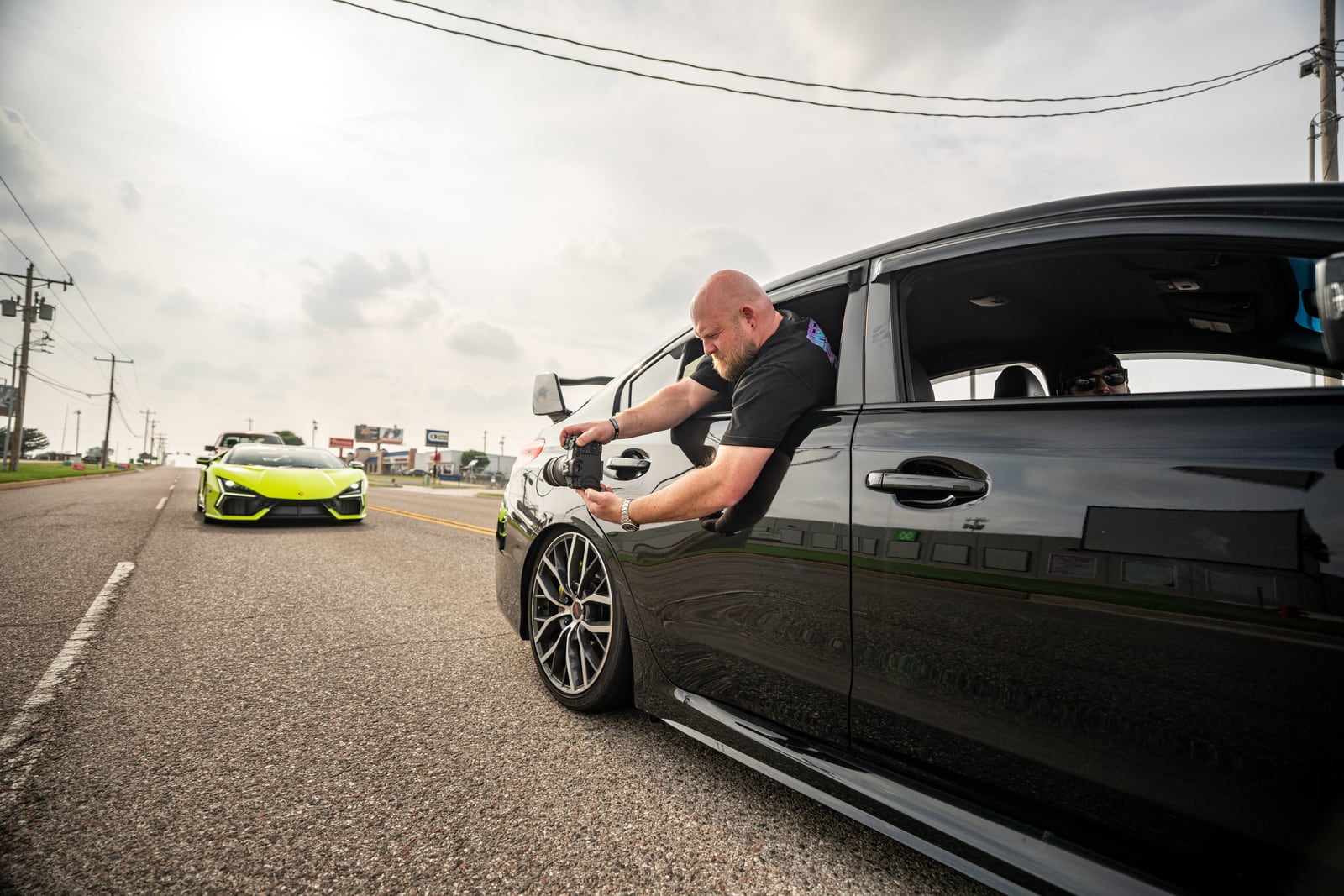
He said Loftis probably had more photos in his phone than anyone he’d ever known, and he didn’t only document cars. He photographed people, flowers, butterflies, trains, airplanes, trees. Whatever was in front of him, wherever he traveled, so that he could look back later and remember where he had been. He sent friends the goofiest pictures he could find a reason to take, a butterfly perched on his nose somewhere in the middle of Alaska, and in Holt’s telling, that was the real subject all along. Not the quarter mile. The experience, and the people in it.
“He just did a great job documenting life.”
JARED “J-ROD” HOLT
The cars were how he got everyone in the same place. The rest of it: that was what he was actually keeping.
CHAPTER VI · THE CRUISE
It got together and drove.
The funeral had already happened. Kyle passed on May 5, 2026, at the age of 43; the service was held in Nebraska, where the story began, and where friends had already worn 1320Video shirts and hats in his honor. What followed in Oklahoma was something different. Not a service, but the thing the community actually did when it had no other language for grief.
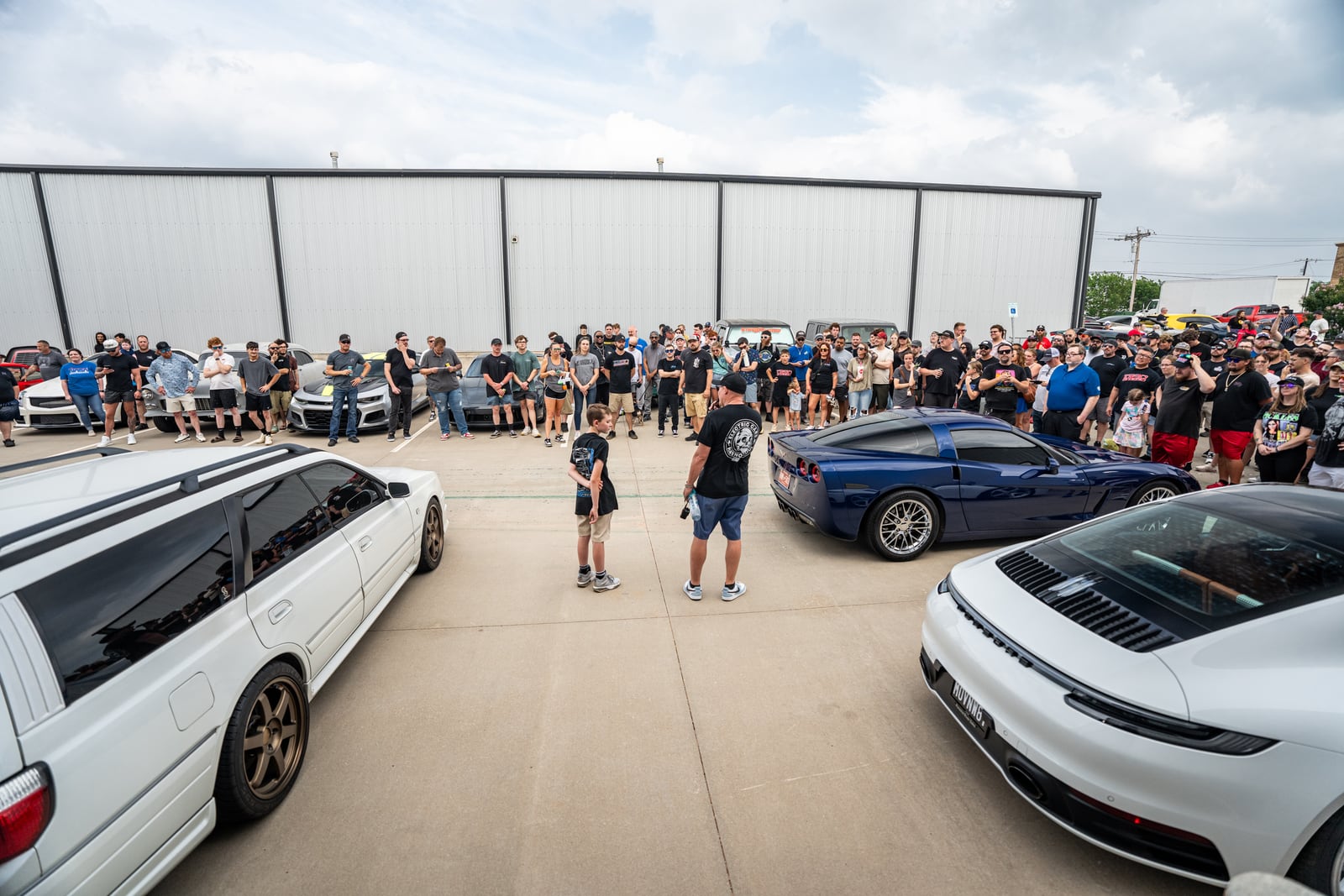
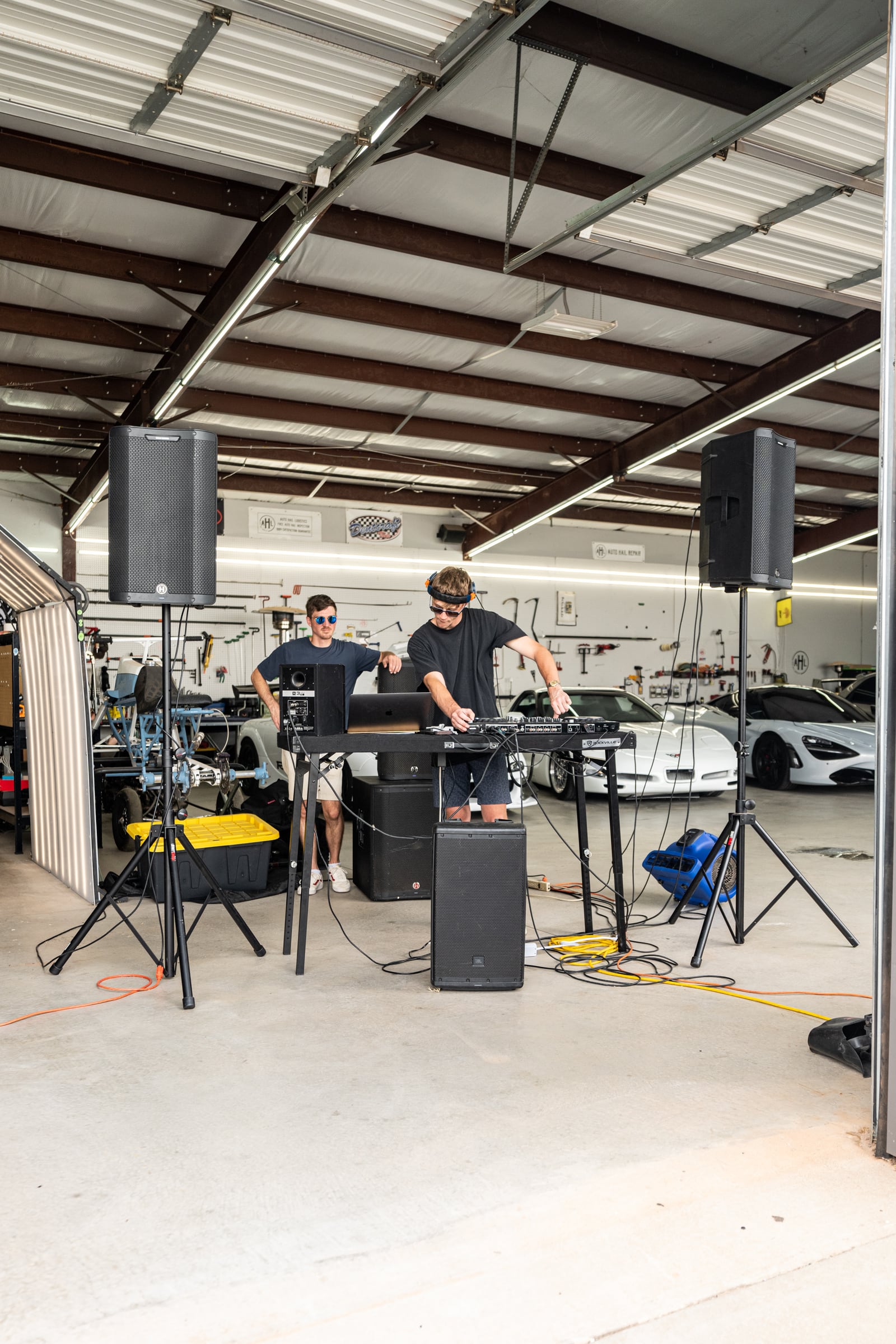
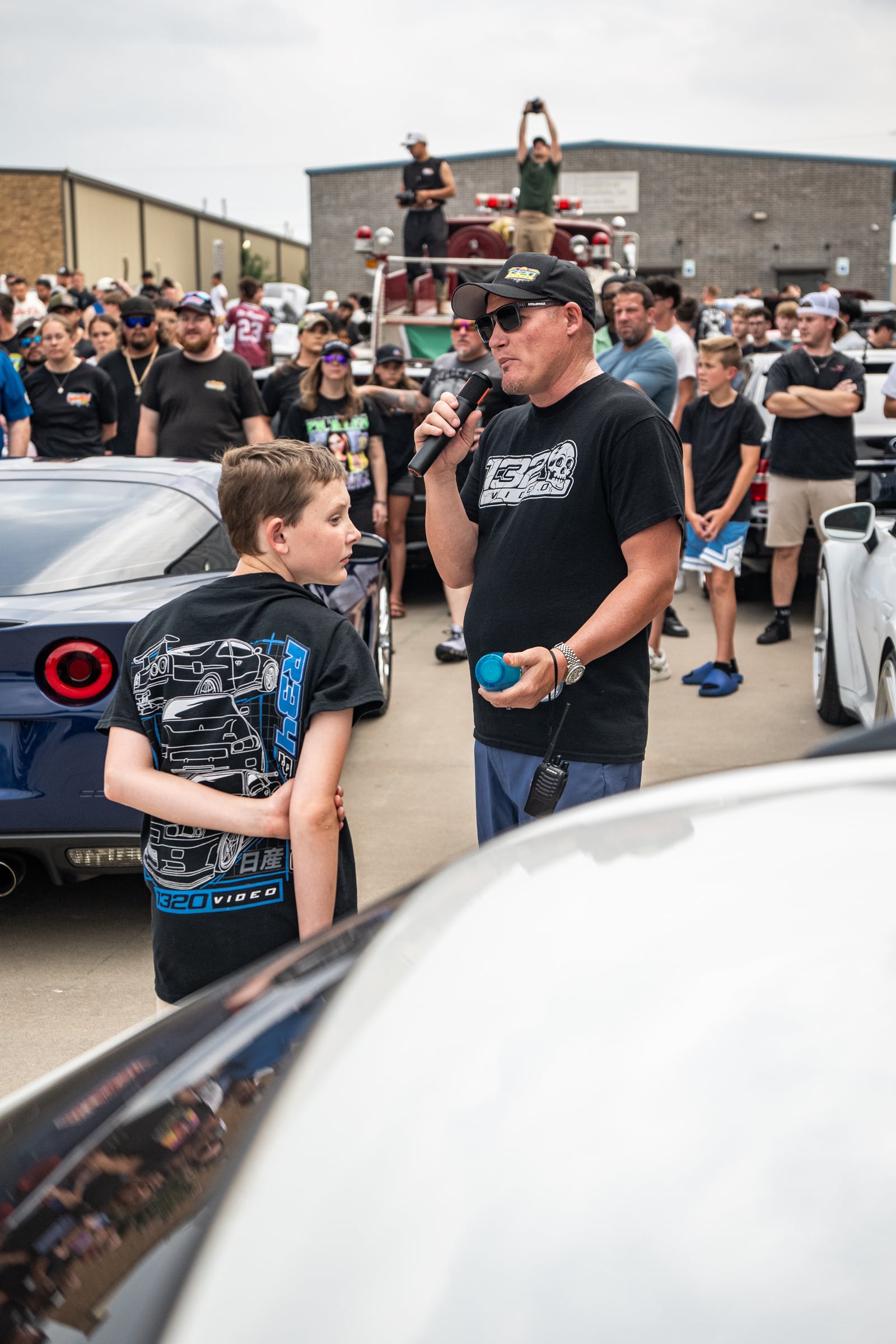
On a hot, humid day between Oklahoma City and Edmond, somewhere in the range of three to four hundred cars came together to drive. It was not a polished corporate production, and it was never meant to be. Jared Holt put the word out as soon as Kyle passed and handed the logistics to Justin Lyons, the event coordinator and a friend of both Kyle and J-Rod, who had the building, the DJs, and the cameras to pull it off. Holt set the intent and let it run, which was, in itself, very much the point.
Lyons described the practical side plainly: they had five days. Holt had the vision, but not the bandwidth. Lyons and his crew handled the flyer, the route, the location, the business-owner calls, and the police contacts through Oklahoma City, Edmond, Arcadia, and Luther so the cruise could move without being broken apart. Within half an hour of talking with Holt, they were moving. The flyer and route were ready the morning after Kyle passed. The post reached about 25,000 views in a week, more than many local event flyers did in a month.
The organizing had to stay respectful. Lyons tracked down a memorial photo through Chandler, the 1320Video crew, and Matt in Nebraska, then kept the flyer focused on Kyle rather than the company. He found Kyle’s favorite song and had the DJ play it at the event, one of those small moments where, as Lyons put it, if you knew, you knew.
“Kyle would have wanted the rusty shit box with the turbo hanging out of the hood to be right there next to the McLaren.”
JARED “J-ROD” HOLT

That was the instruction, more or less: a memorial that refused to sort people by what they drove. Holt described it as a more spirited cruise than the small-town runs he had organized before, closer to something 1320Video itself would have done. Attendees turned out in the same 1320 shirts and hats they had worn days earlier in Nebraska. People Holt hadn’t seen in a decade, older now, married, with kids of their own, came back to drive.

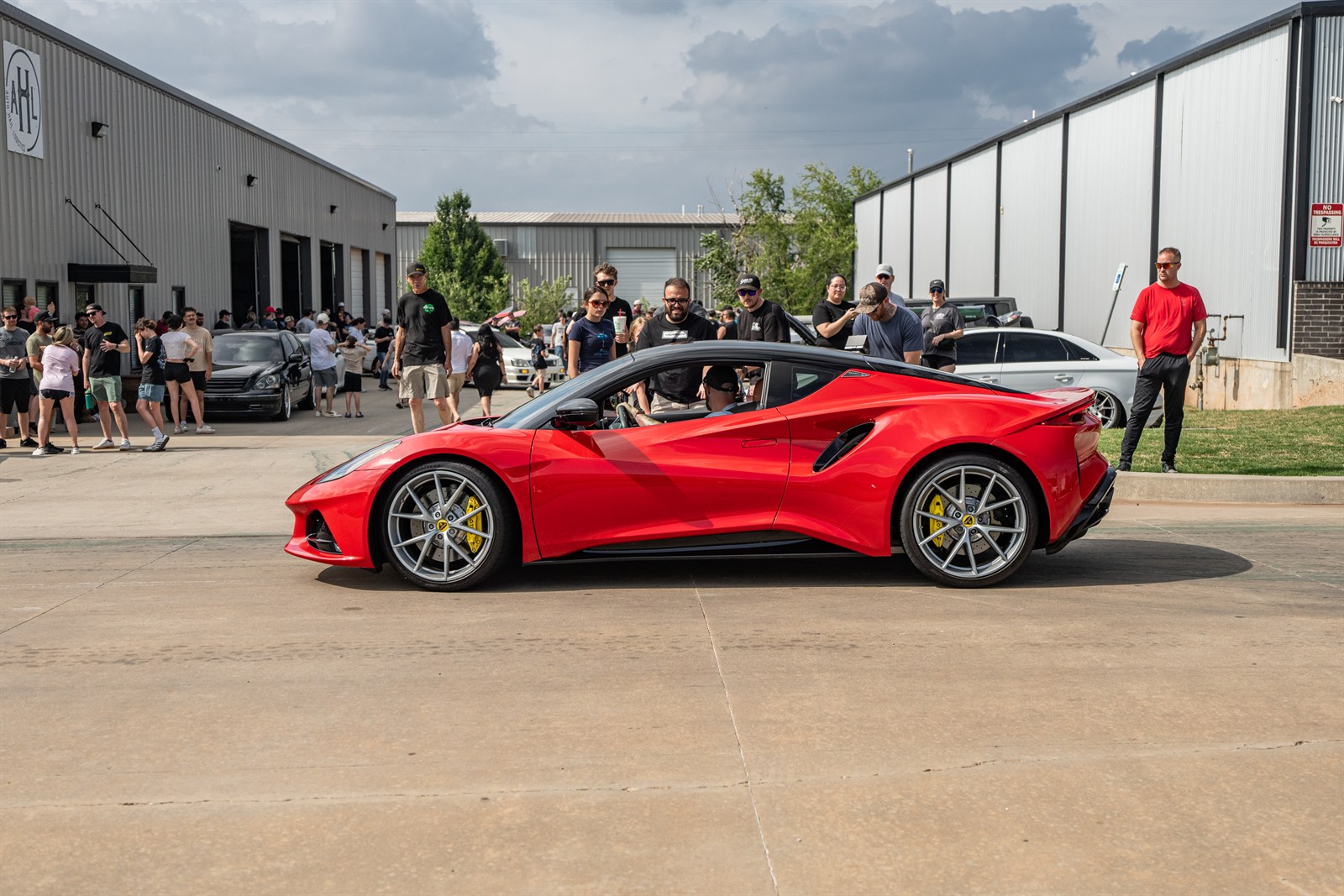
The names mattered because they showed what kind of gathering it was. Shawn Abedi had sat with Kyle and J-Rod on the 1320Video podcast. Diego Siverio was not really a street-racing guy; he loved exotics, knew the same people, and showed up in his Lotus Emira as part of the same tight-knit Oklahoma community. Kyle’s world had room for both of them.
For some who came, the day did something they hadn’t expected. It pulled them back. Lyons said there was no clean way to explain the energy. He had spent recent years in a diesel truck rather than a fast car; now he was back in a bolt-on STI, shooting rolling footage with friends among exotics and freeway pulls, and feeling, suddenly, like it was the early twenties again, out on the turnpike at three in the morning. Holt’s reply was simple: Kyle was there.
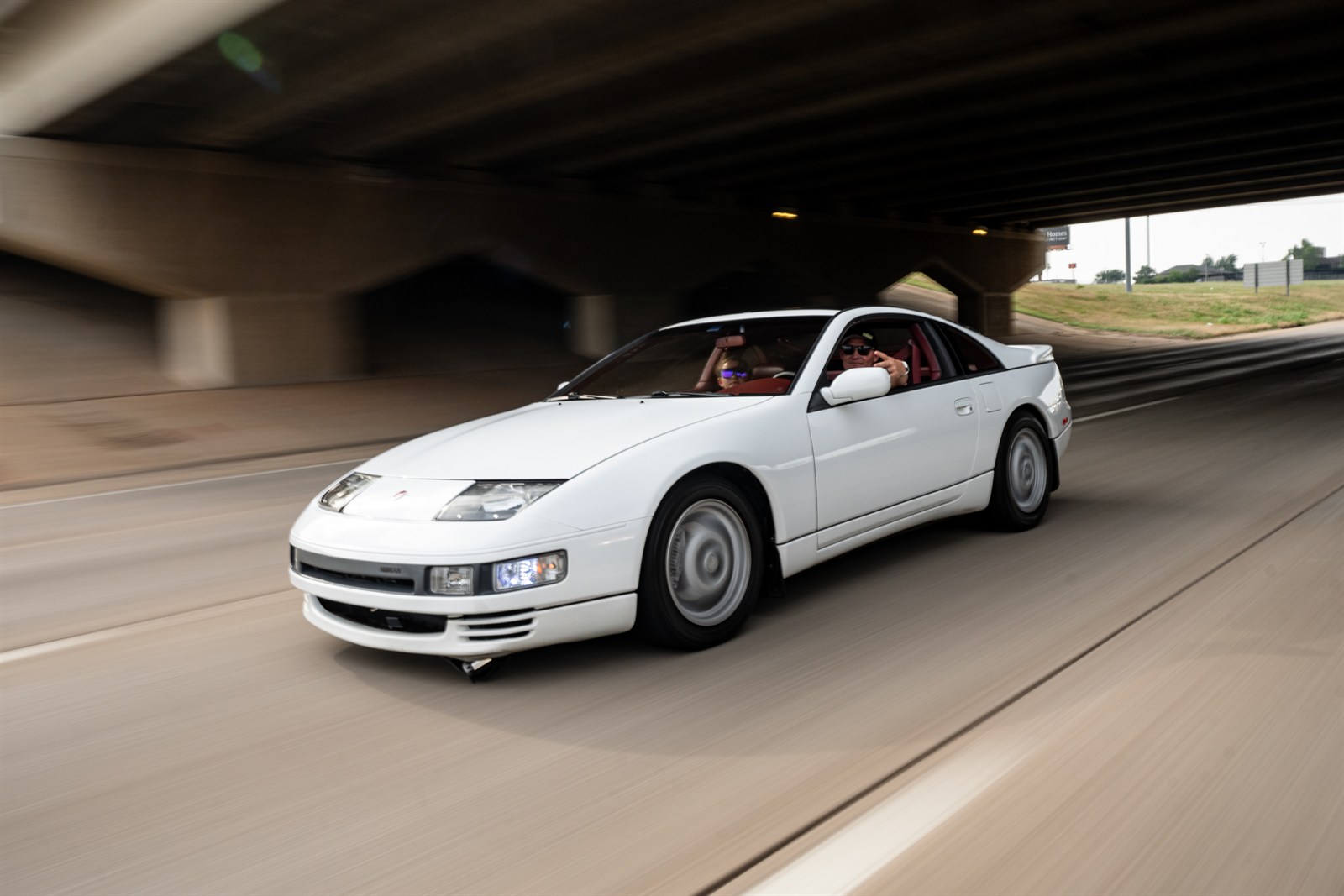
Almost against the will of the people who showed up, he had brought them back to the days he’d spent his life keeping alive, and which, in the end, this remembrance exists to keep alive a little longer. He documented life so the rest of us could go back and find it. On a hot, humid afternoon between Oklahoma City and Edmond, a few hundred cars proved the archive was never really the tapes or the hard drives. It was everyone who came back to drive.
In Memory
For Kyle, who pointed the camera at all of us and made it feel like home.
COLOPHON · SOURCES, AND A WORD OF THANKS
A Note on How This Was Made.
This remembrance was assembled almost entirely from primary sources: Kyle’s own voice, and the voices of the people who knew him best.
The biographical narrative is drawn from the first episode of 1320 Stories, the series Kyle launched to tell the stories behind the racers and the people he met, beginning with his own. The recollections of his character, his leadership, and the memorial cruise come from phone interviews with Jared “J-Rod” Holt and Justin Lyons, supplemented by two episodes of the Talkin’ Shift podcast featuring Kyle and Jared together.
Public reporting was used only to confirm the date of his passing and basic context; everything substantive here comes from those recordings. Quotations are taken from the source audio and should be checked against final footage for exact wording before publication.
Some material shared in the course of reporting was given off the record, at the speaker’s request, and has been kept out of this piece entirely. It is not referenced here, and was never intended to be.
This is a working remembrance, prepared with care and with affection, for a community that is still finding its words.
Sources & Contributors
- Origin story
- 1320 Stories, Ep. 1. The history of 1320Video, in Kyle’s own words
- Podcast
- Talkin’ Shift Ep. 013. J-Rod’s racing stories, with Kyle Loftis
- Podcast
- Talkin’ Shift Ep. 14. With Misfire, hosted by Jared Holt
- Interview
- Phone conversation with Jared “J-Rod” Holt. Biography & memorial cruise
- Interview
- Phone conversation with Justin Lyons. Character, event coordination & memorial cruise context
- Event coordination
- Justin Lyons, event coordinator and friend of Kyle Loftis and Jared “J-Rod” Holt. OKC–Edmond, May 2026
- Event page
- Facebook event
- Public confirmation
- People. Date of passing and age
- Photography
- IMG88. Memorial cruise photography
- Founder
- Kyle Loftis. 1320Video · 1982–2026
Dedication
For the 1320Video family, sixty, seventy, eighty strong, friends first, always.
Meridian 98 · Issue 003 · In Memoriam
Set in Playfair Display & Inter
98° W · Oklahoma · MMXXVI